


Hospitals in Wuhan began exploring 3D printing a decade ago and, from 2015, rapidly entered the “3D printing era.” The technology has benefited patients in orthopedics, stomatology, plastic surgery, and other specialties, but because the heart is a beating, soft muscular organ, clinical adoption of 3D printing has been “a step slower.”
In November 2020, Wuhan Asia Heart Hospital introduced 3D printing equipment and has already used 3D printing for surgery in more than a dozen patients with complex heart disease. How is a heart “printed,” and how does it help surgeons operate?

Printing a realistic cardiovascular segment in 3 hours
21-year-old Xiao M had been found to have a cardiac abnormality since childhood but, with mild symptoms, never received treatment. Last year she was diagnosed with hypertension related to congenital heart disease; antihypertensive drugs were not appropriate—cardiac disease required treatment.
Echocardiography showed ventricular septal defect, patent ductus arteriosus, atrial septal defect, mild aortic regurgitation, mild-to-moderate tricuspid regurgitation, and a relatively small descending aortic diameter—complex congenital heart disease.
She was later admitted to Asia Heart Hospital. Based on treatment needs, CT and MRI were arranged; from the results, precise software modeling produced a 1:1 print of the diseased aortic arch (the arched upper portion of the aorta).
On site, we saw the hospital using a color multi-material 3D printer: the print head sprayed photosensitive resin back and forth; after leveling and curing, the product built up layer by layer.
Printing took about 3 hours. Staff removed large jelly-like supports to obtain a red aortic arch model—soft and elastic to the touch—clearly showing a twisted, stenotic segment due to developmental abnormality.
“If complex lesions lie inside the heart, a complete heart model is needed, generally taking more than 20 hours,” staff explained.
Using the model, physicians discussed the plan with Xiao M and her family and quickly decided on complete replacement of that segment with a prosthetic graft. She then underwent surgery to repair cardiac defects and replace the graft. Postoperative blood pressure normalized promptly, and she was later discharged after recovery.
Once “remote-printed” for a patient in Henan
In November last year, Asia Heart Hospital first performed 3D printing–assisted surgery for 9-year-old Xiao C with congenital heart disease. He had undergone surgery at 3 months of age, but as height and weight increased, cardiac problems recurred.
Examination found thatXiao Chad complex intracardiac anatomy plus left ventricular outflow tract stenosis, pulmonary valve and subvalvular outflow stenosis, mild aortic regurgitation, and other issues—making surgery very difficult. Physicians then printedXiao C’s heart as a 1:1 model, restoring fine internal structure.
Treating the model as a “real-scene map,” the expert team outlined malformations, optimized the plan, and successfully completed LVOT relief and pulmonary artery reconstruction; the child recovered well.
A month later, a hospital in Henan requested consultation: a patient with complex congenital heart disease faced a very difficult operation and hoped President Tao Liang of Asia Heart Hospital would advise.
The patient was not local; only CT and MRI images could be sent, requiring Wuhan experts to “imagine” cardiac anatomy spatially. Tao decided to print a heart model and consult on the physical object, rehearsing the surgical plan.
Because anatomy was extremely complex with many anomalies, modeling alone took two to three days and printing more than 20 hours. The effort paid off: Tao and the team designed a precise plan from the model, traveled to Henan for surgery, and the patient has since recovered.
“This remote printing opened broader prospects for our 3D printing work and will improve efficiency in future remote consultation and remote surgical guidance,” said Shen Qunshan, Director of the Congenital Heart Disease Center at Asia Heart Hospital.
Looking forward to 3D-printed living organs
In 2016, Hubei Provincial Third People’s Hospital first used 3D printing for surgery in a patient with severe pelvic fracture. After success, the hospital’s website predicted: “With so many benefits and uses, 3D printing will soon be as widely applied as CT and MRI.”
That prediction has already come true: since 2015, more Wuhan hospitals have explored 3D printing. After years of development, it is now widely used at Tongji Hospital, Union Hospital, Hubei Provincial People’s Hospital, Zhongnan Hospital of Wuhan University, Wuhan Children’s Hospital, and other major centers—printing bone and joint models to assist surgery has become routine.
Take Union Hospital, Tongji Medical College, Huazhong University of Science and Technology, as an example. In 2015, it was the first in China to make a 3D-printed mechanical hand for a 6-year-old boy who had lost his left hand—usable for drinking, pinching grapes, and riding a bicycle; orthopedics then explored printing injury models for complex fractures to rehearse surgery; stomatology later introduced printers for braces, dentures, and more, with greatly improved precision and strength. Multiple departments now use 3D printing.
As technology advances, clinical scenarios keep expanding. In 2017, the Hospital of Stomatology, Wuhan University, 3D-printed a titanium-alloy “mandible” for a 74-year-old with gingival cell carcinoma after partial right mandibular resection; in 2019, Wuhan Children’s Hospital fabricated a size-matched sternal patch via 3D printing for a 2-year-old girl with congenital sternal cleft to protect a fragile heart.
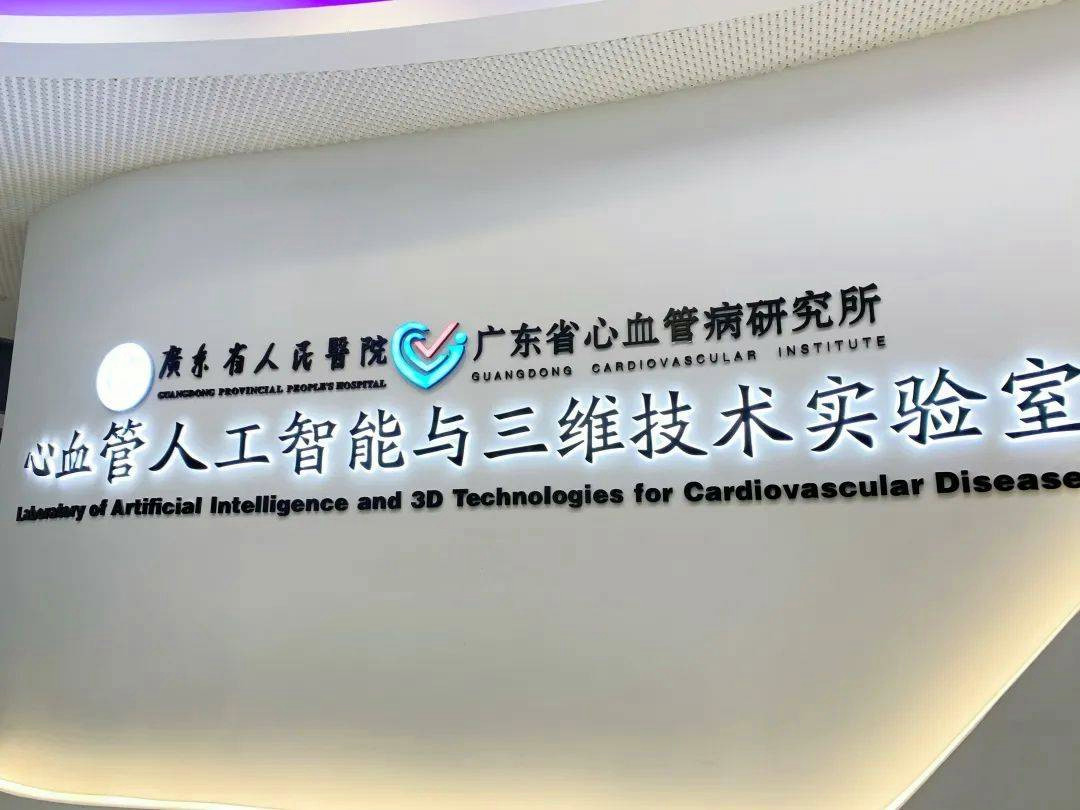
Nationwide, Beijing Jishuitan Hospital, Shanghai Ninth People’s Hospital affiliated with Shanghai Jiao Tong University School of Medicine, the First Affiliated Hospital of Zhejiang University, Guangdong Provincial People’s Hospital, and many others are actively applying 3D printing. Among them,in collaboration with Sailner Digital Medical,Guangdong Provincial People’s Hospital—among the earliest in China to establish a cardiovascular 3D printing laboratory—has used the technology for preoperative planning in hundreds of heart disease cases.
At present, however,medical 3D printing technologyin clinical use mainly supports preoperative planning, rehearsal, and orthopedic matching, while highly anticipated living-organ printing remains exploratory. Physicians and patients alike hope breakthroughs come faster still, so that 3D-printed living organs can ease transplant shortages and bring new hope to more patients with end-stage critical illness.