


Today, as one of the representative frontier technologies, 3D printing has earned recognition from many industry professionals for its application value. In healthcare, medical 3D printing is gradually penetrating multiple specialized scenarios such as surgical model rehearsal and rehabilitation device manufacturing. Driven by frontier 3D printing technology, traditional healthcare service models are transforming faster, and smarter, more efficient, and more specialized care models are taking shape.
Surgical Rehearsal Models
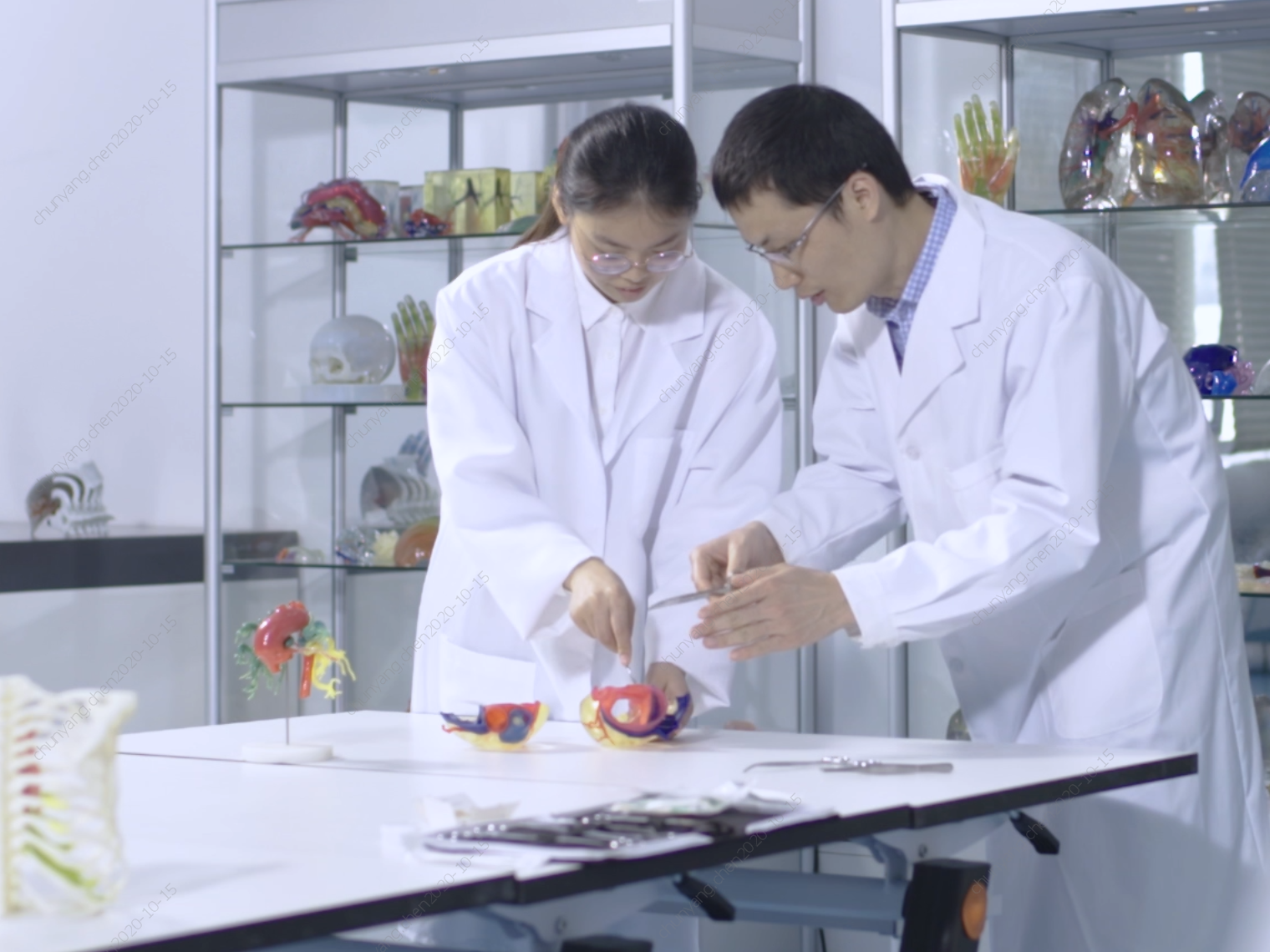
For high-risk, high-difficulty procedures, preoperative planning is essential. In the past, clinicians typically obtained patient data via CT, MRI, and other imaging modalities, then converted 2D medical images into realistic 3D data with software. Today, clinicians can use 3D printers and related equipment to print three-dimensional models directly. This both assists precise surgical planning and improves success rates, and facilitates communication with patients about the surgical plan.
Surgical Guides
As intraoperative assistive tools, surgical guides help clinicians implement surgical plans accurately. Current guide types already include joint guides, spinal guides, and dental implant guides. Medical 3D-printed guides address limitations of traditional manufacturing while allowing on-demand adjustment of size and shape, so each patient can have a guide that truly meets their needs.
Dental Applications
In recent years, 3D printing in dentistry has remained a focus of attention. Overall, applications center on metal teeth and the design and fabrication of clear aligners. Frontier 3D printing has created more possibilities for personalized aligners for orthodontic patients. Different correction stages require different aligners; using 3D printing to produce multiple sets not only supports healthy dental development but also lowers fabrication costs.
Orthopedic Applications
Many clinicians now use frontier 3D printing to treat patients with bone injury. By building accurate three-dimensional physical bone models, they can further observe bone quality and the specific injured sites and formulate corresponding treatment plans. With 3D printing's technical advantages, challenges in treating long-bone fractures, hip injury, and related conditions are being progressively overcome.
Skin Repair
In treating patients with severe burns from fires and similar injuries, long treatment cycles and conspicuous postoperative scarring have limited further improvement in skin repair outcomes. For years, researchers have sought new ways to enhance skin repair; frontier 3D printing offers a new pathway. By scanning the damaged skin wound, clinicians can reconstruct a 3D wound model, then use advanced printing to deposit multiple high-viscosity materials containing skin cells in situ with high precision and high viability, building biomimetic skin structures.
Biological Tissues and Organs
In recent years, scientific and medical communities have made 3D printing of biological tissues and organs a key research focus. Bioprinted tissues and organs currently include the nose, ear, blood vessels, kidney, heart, skin, and cornea. Whether artificial vessels, cartilage, liver tissue, or kidney tissue, the core lies in isolation (or directed induction) and large-scale expansion of specific cell types. Bioprinting can construct the three-dimensional shape of tissues and organs during culture and guide cell tissues to grow into pre-designed shapes, promoting healthy development and enabling replacement of diseased human tissue.
Rehabilitation Medical Devices
In practice, prostheses, hearing aids, and similar rehabilitation devices require small-batch, customized production. Because designs are relatively complex, traditional CNC machining is often constrained by machining angles and related factors. With 3D printing, manufacturing processes for rehabilitation devices have improved further: cost per customized device has fallen and production cycles have shortened.
Personalized Pharmaceuticals
Amid rapid growth of smart healthcare, patients expect specialized, personalized, and precise care. In pharmaceuticals, using 3D printing to fabricate drug sustained-release devices offers multiple advantages. 3D printing enables localized, detailed control of multiple pharmaceutical materials and precise control of drug composition. For children and the elderly, scientifically controlled dosing also improves medication safety. Through 3D printing forming technology and equipment, powder materials can be bonded into porous structures with complex cavities of medical significance for drug release.
In fact, 3D printing has already quietly transformed traditional healthcare development on multiple levels; representative enterprises in this space include Sailner Digital Medical. As the technology continues to mature, 3D printing will give rise to new models of medical services, and people will further experience the convenience emerging technologies bring to daily life.