


As science and technology advance, computers and mobile phones play an ever more important role in daily life. Looking down at a computer at work and at a phone after work has become the norm for most people, leading more individuals to develop straightening of the cervical curvature and even symptoms of soreness, pain, or dizziness.
 Cervical spondylosis
Human spinal curvature
Under normal conditions, the human spine has four physiological curves, also called physiological curvatures: cervical, thoracic, lumbar, and sacral. The cervical and lumbar regions curve convex anteriorly, while the thoracic spine and sacrum curve convex posteriorly.
The physiological lordosis of the human cervical spine—with thicker anterior and thinner posterior C4–C5 intervertebral discs—forms a natural curvature that increases cervical elasticity and cushions the brain during jumping, impact, and other external forces.
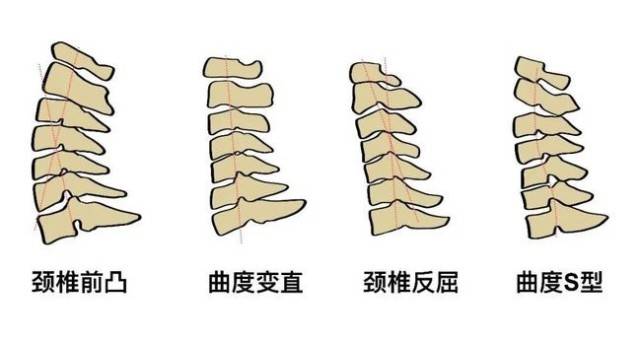 Human cervical curvature
Changes in cervical curvature
Straightening of the natural cervical curvature not only reduces protection of the brain; when the cervical curve straightens, nerves supplying the facet joints are stimulated, leading to neural edema and fibrosis and causing contraction of periarticular muscles. Long-term chronic injury to cervical nerves can cause spasm and fibrosis of the innervated neck muscles, thereby compressing the brachial plexus or stimulating sympathetic nerves and causing extraspinal nerve entrapment.
The relationship between peri-cervical soft tissues and the cervical spine is like that of a bow and its string. When cervical muscle groups contract and fibrose, bony structural changes may follow, compressing the cervical cord and triggering cervical spondylosis—much as a bowstring that loses elasticity alters or even destroys the bow’s structure.
Cervical curvature measurement
What counts as a normal cervical curvature, and how should it be measured? Several commonly used methods are introduced below:
Borden’s method: measuring the depth of the cervical physiological curve
This is currently recognized as an objective and accurate method for cervical measurement. Although some literature reports limitations, research has yet to identify a more effective method validated by large-scale basic and clinical studies, and Borden’s method remains irreplaceable in cervical curvature measurement.
A straight line A is drawn from the posterosuperior margin of the dens of the axis (C2) to the posteroinferior margin of the C7 vertebral body; a continuous line B is drawn along the posterior margins of the cervical vertebral bodies; the perpendicular distance C at the widest point between lines A and B is the depth of the cervical physiological curve.
When C is positive, it is called ‘lordosis,’ the normal cervical physiological arc; when C is zero, it is called ‘straightened,’ i.e., loss of the physiological cervical curve; when C is negative, it is called ‘kyphotic/reversed.’ The normal C value by Borden’s method is 12±5 mm.
Cobb angle method: measuring the cervical included angle
C2–C7 (second to seventh cervical vertebrae) Cobb angle measurement is commonly used; literature suggests this method is relatively reliable and unaffected by magnification factors.
On a lateral cervical radiograph, the extended lines of the inferior endplates of C2 and C7 are measured, perpendiculars to these two lines are drawn, and the acute angle formed by the intersecting perpendiculars is taken as the cervical curvature. The normal angle is generally 22+5°.
Harrison method: measuring the cervical included angle
On a lateral cervical radiograph, parallel lines are drawn along the posterior margins of the C2 and C7 vertebral bodies; the acute angle formed by their intersection is the cervical spine angle (CSA). The normal angle is generally greater than 34°.
Cervical curvature is also strongly correlated with age and generally decreases with aging. In young people, improvement in cervical curvature correlates positively with relief or disappearance of neck symptoms and signs. With aging, osteoporosis, vertebral hyperplasia, and ligament calcification become more prominent, physiological stress on the cervical spine changes, and cervical curvature bears only part of the load—yet improving curvature often still relieves neck symptoms.
Cervical pillow
An estimated nearly one quarter of people experience neck pain, and poor pillow design is an important factor in this high incidence. Inappropriate pillow support adversely affects the cervical spine, causing neck pain and cervicogenic headache and ultimately poor sleep quality.
Especially for patients with cervical spondylosis, a pillow suited to the physiological cervical curvature should be chosen according to the degree of cervical pathology and changes in muscle tissue, vessels, and nerves, with restoration of physiological curvature as the guiding principle.
This physiological curve both maintains extrinsic muscular balance of the cervical spine and preserves the physiological anatomy within the spinal canal. Soft, breathable materials with a yuanbao (ingot) shape—lower in the middle and higher at both ends—are preferred and can also relatively immobilize and stabilize the head and neck, reducing abnormal movement during sleep.
Sailner Digital Medical3D-printed personalized cervical pillow
Choosing a cervical pillow is even more important. Some pillows are overly soft with poor corrective effect and lack personalized orthotic planning; soft materials can also make corrective force and outcomes unpredictable. An inappropriate pillow size may cause or worsen neck pain.
Everyone’s cervical curvature and soft-tissue condition differ, and some patients are at different stages of cervical spondylosis; therefore, personalized 3D-printed cervical pillow design is needed for individualized correction of cervical curvature and the elasticity of peri-cervical tendons, ligaments, and other soft tissues.
Sailner Digital Medical, an enterprise focused on medical 3D digital application solutions, measures cervical curvature through optical neck scanning and lateral cervical radiography. Sailner’s professional orthotists design a personalized cervical pillow based on the patient’s condition, which is then fabricated by 3D printing to correct physiological cervical curvature. After fitting, X-rays are taken to achieve precise correction and treatment while avoiding discomfort and overcorrection.
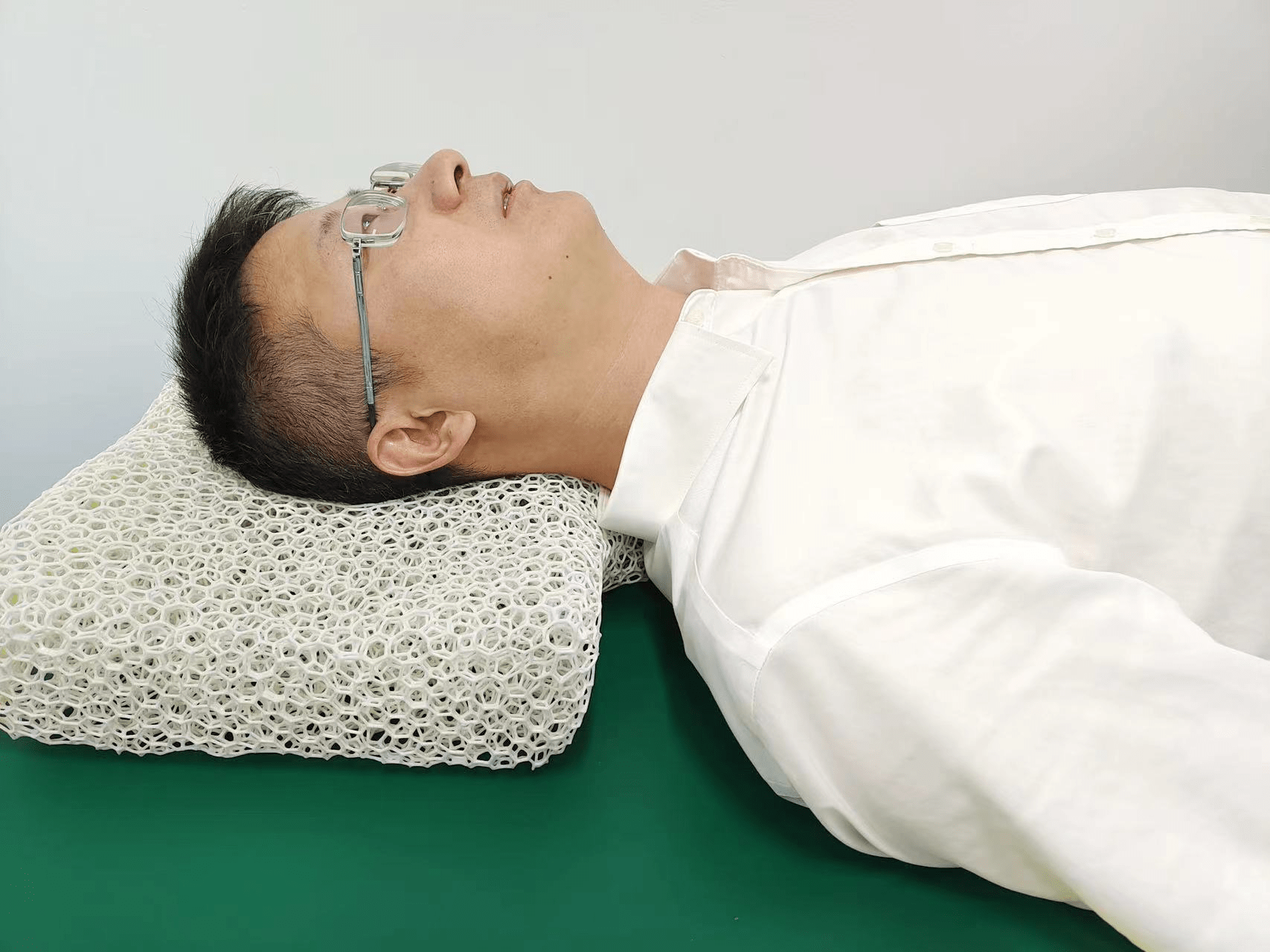 Sailner Digital Medical customized head pillow
For patients with cervical spondylosis, a well-designed cervical pillow can closely fit the cervical spine and correct physiological curvature; as curvature improves over time, the curve of the 3D-printed cervical pillow can be gradually adjusted so that a straightened cervical spine gradually recovers a normal physiological curve and neck–shoulder pain symptoms improve. For people who spend their days driving, working at computers, or looking down, personalized 3D-printed cervical pillows during sleep can relieve fatigue of cervical muscles and ligaments, gradually improve cervical curvature, and enhance sleep quality.
Watershed Topographic Map 2.0